


Author: Anastasha Arlene Junigo; Published Date: 27th September 2024
When warm sun rays pierced the morning mist at the Forestry Complex on the 11th of September, relief swept the members of Sapulut’s R&D team because it was a sign that the weather would be favorable to host a special Field Day for the Executive members of Borneo Forestry Cooperative (BFC). The day’s goal was to showcase R&D trials in the nursery and the plantation sites while allowing the R&D team to share their findings or progress. In the spirit of the core value of striving for continuous improvement of self and Sapulut through learning, the executives and consultants would also have opportunities to review the activities conducted by R&D.
Along with Sapulut’s Managing Director Mr. Norman Wong and General Manager Mr. Bryant Wong, the field day was also graced by the attendance of Mr. Glen MacNair and Mr. Chris Garside from Forest Solutions Malaysia (FSM), Mr. Francois Blignaut from the Samling Group, Mr. Yusa bin Hassan and Dr. Muhammad Izzat bin Ahmad Fauzi from MIE Sustainable Energy (MIESE), Mr. Ian du Plessis from Mekong Timber Plantations (MTP), Mr.Johan Bredenkamp from Triferto Fertilizers, as well as BFC consultants, Mr. Paul Warburton, Dr. Colin Smith, and Dr. Yani Japarudin.
The day began at the Sapulut nursery where the group was greeted by Sapulut’s Forest Resource (R&D) Manager, Mr. Matthew Ngui who introduced the members of Sapulut’s R&D team. Displayed on the nursery benches were white laran (Neolamarckia cadamba) and red mahogany (Eucalyptus pellita) seedlings that were samples of a fertilizer trial. One of the research officers then began explaining the trial while gesturing toward the seedlings arranged in a height gradient to show the effects of different fertilizer rates on seedling growth. Another research officer then presented his progress on an insecticide trial, referring to graphs in distributed booklets that show the effectiveness of scheduled pest control. After that, engaging questions and discussions erupted in the group which persisted even after a bell was rung to signify that time was urging everyone to move on to the field.
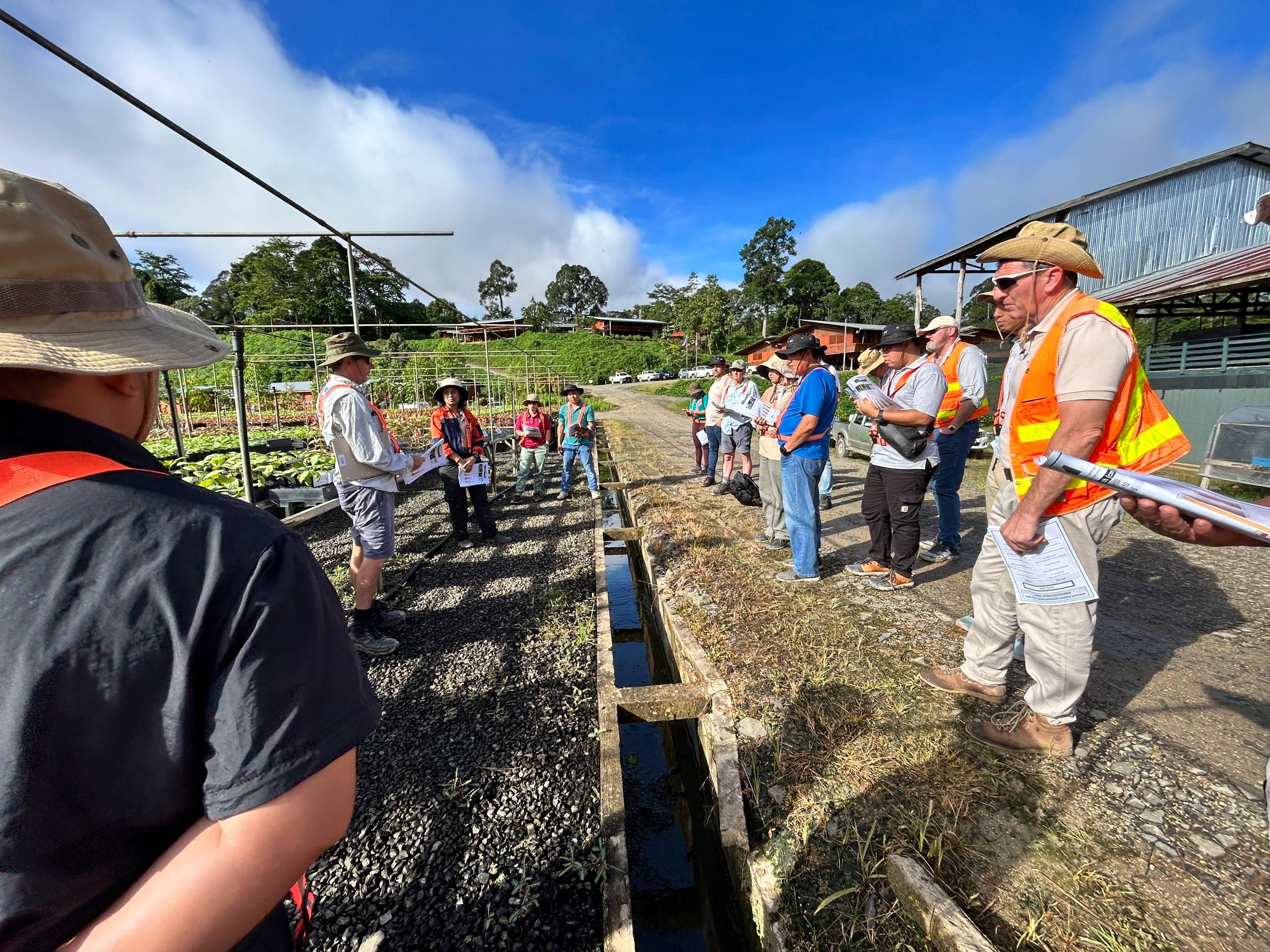
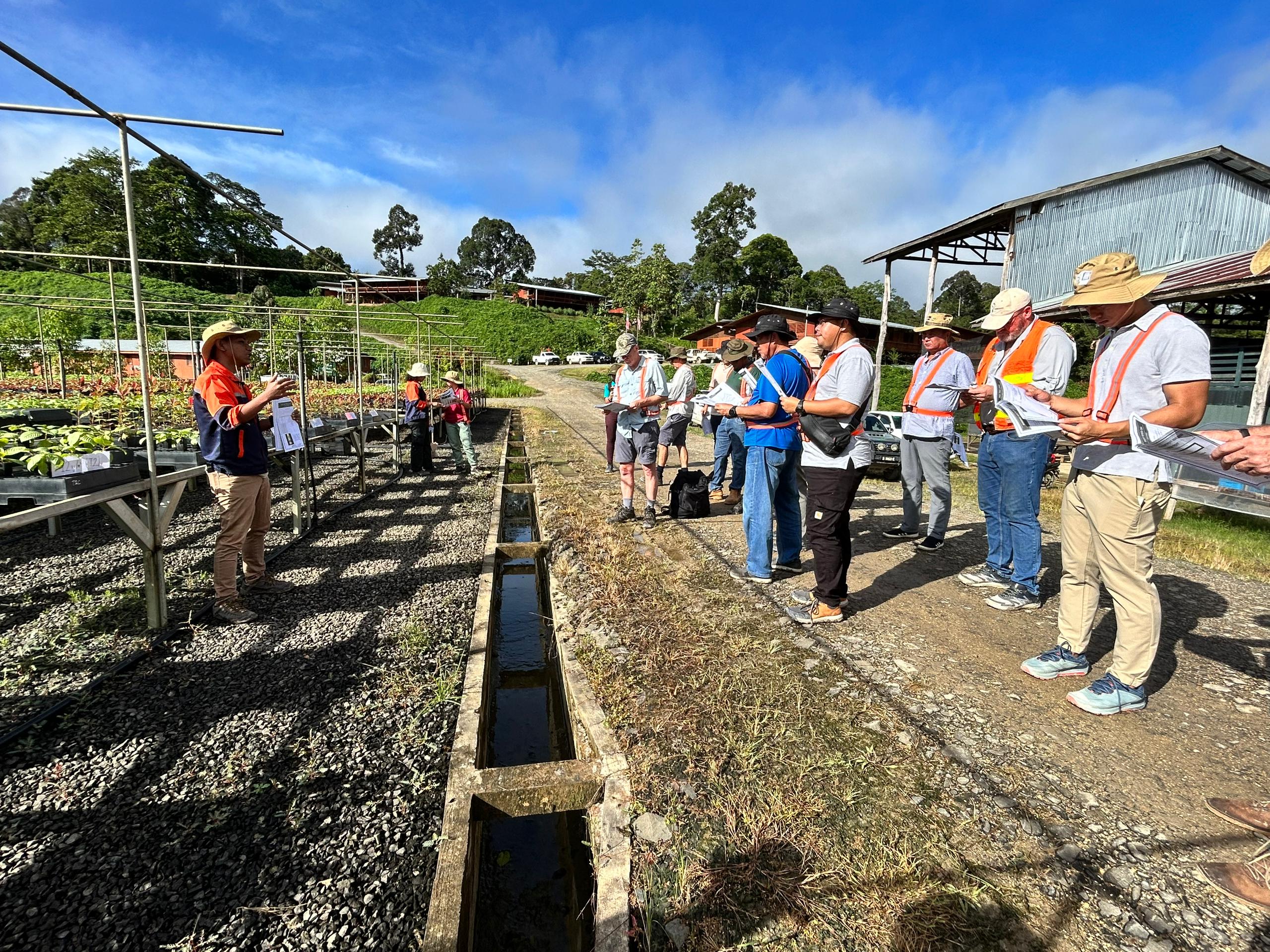
Researchers explain fertilizer and insecticide trials, showcasing seedling growth and pest control data.
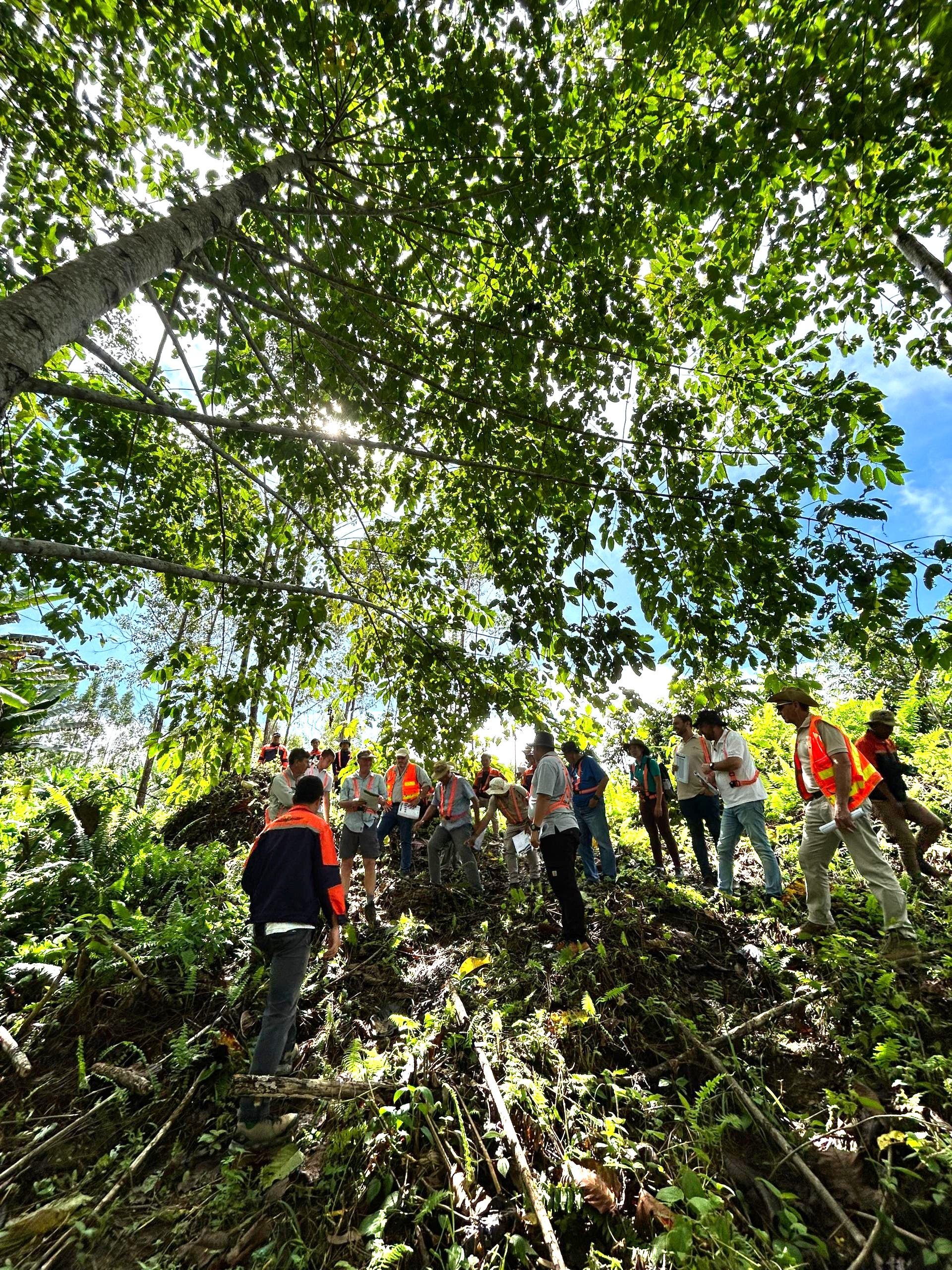
A steady drive on asphalt and gravel roads led to the next location, a taxa (species) trial established in 2020. After a brief hike up a slope, the group stood under a stand of trees comprising different timber species. Data presented on the site showed that certain timber species like the Albizia, have grown to superior girth while other species showed promise in other aspects such as height, survival, and health. As the group observed the differences in each species stand and debated on their suitability for cultivation, the time bell rang again so that discussions could be carried on to the next destination.
The next site was another fertilizer trial which was, this time, established on the grounds of a plantation area. This trial earned the most interest from the group because the interesting findings presented by the research officer in charge of the site could potentially aid research toward developing a unique fertilizer. There was also a small observational study plot where a particular method of weed control had eradicated weeds for 3 months, which the group also found intriguing because of the potential revolutionary benefits it could bring to plantations.
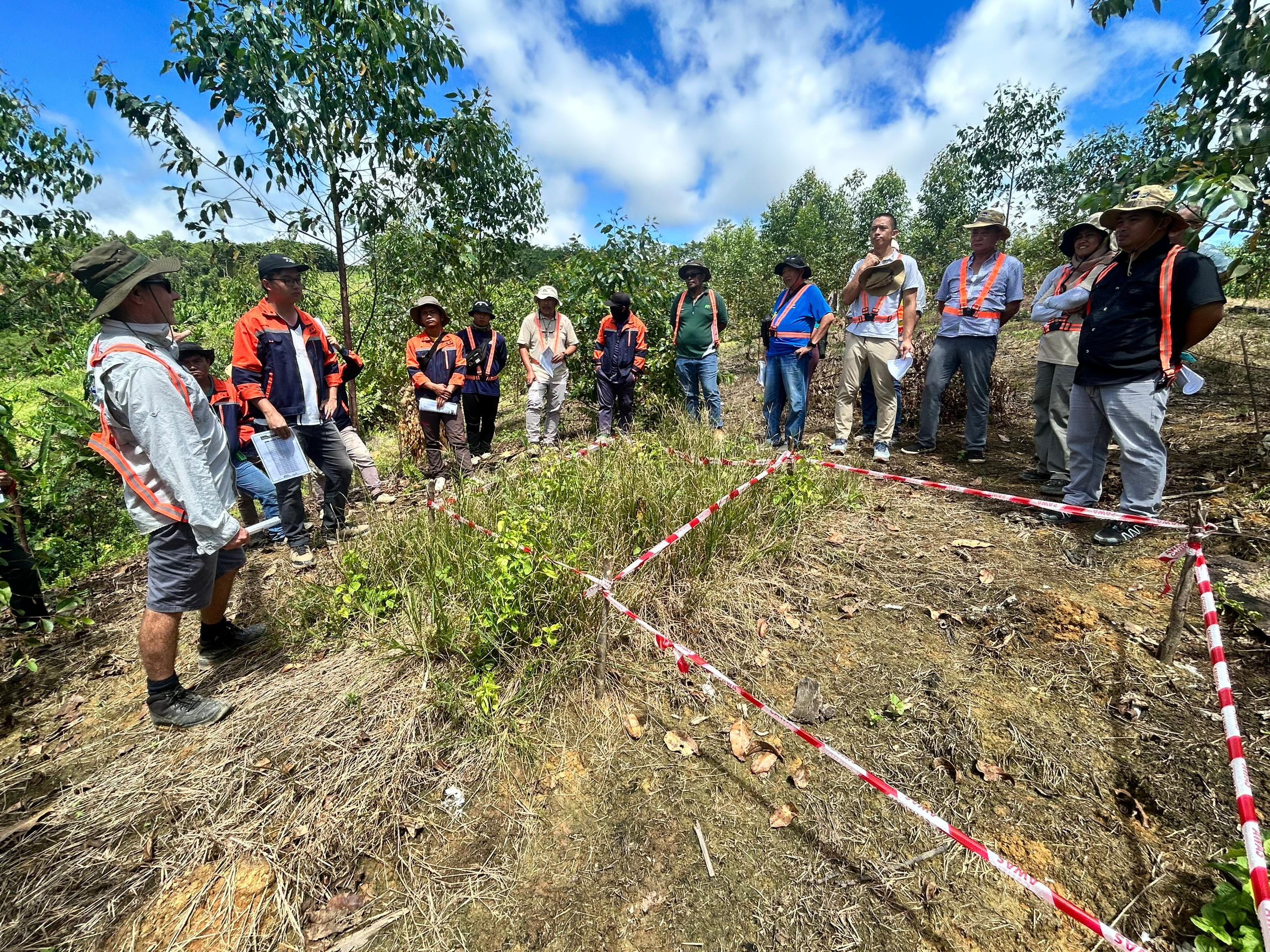
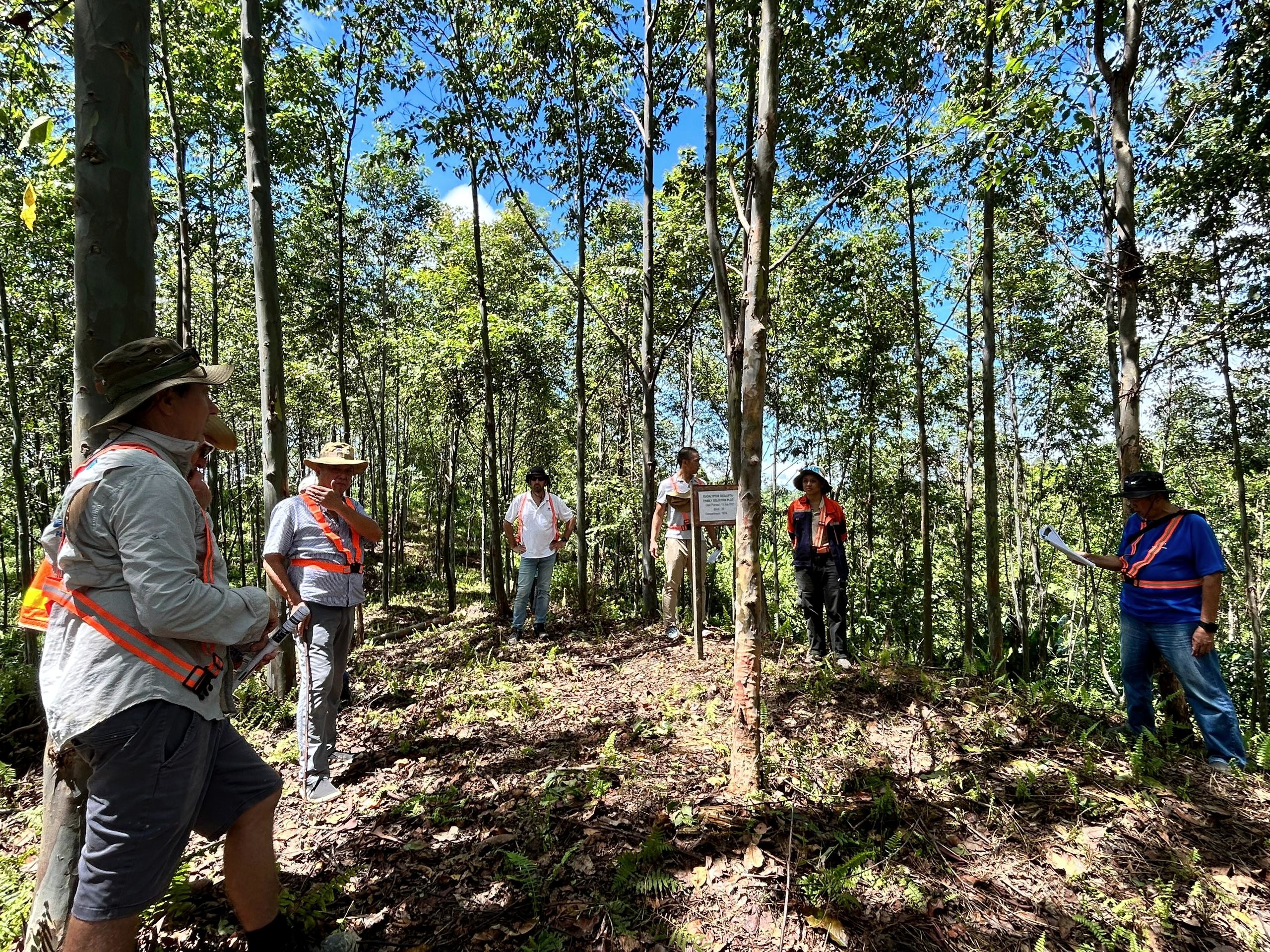
In the next location, a young stand of Eucalyptus deglupta, commonly known as rainbow trees, welcomed the group under its cool shade. There, BFC’s forestry and soil specialist, Dr. Colin, highlighted how the very site-specific tree species was flourishing on the site which could indicate a site-species match. Plans to develop the species were discussed among the group and they also acknowledged the procedural challenges that Sapulut has faced in establishing sites for genetic improvement research.
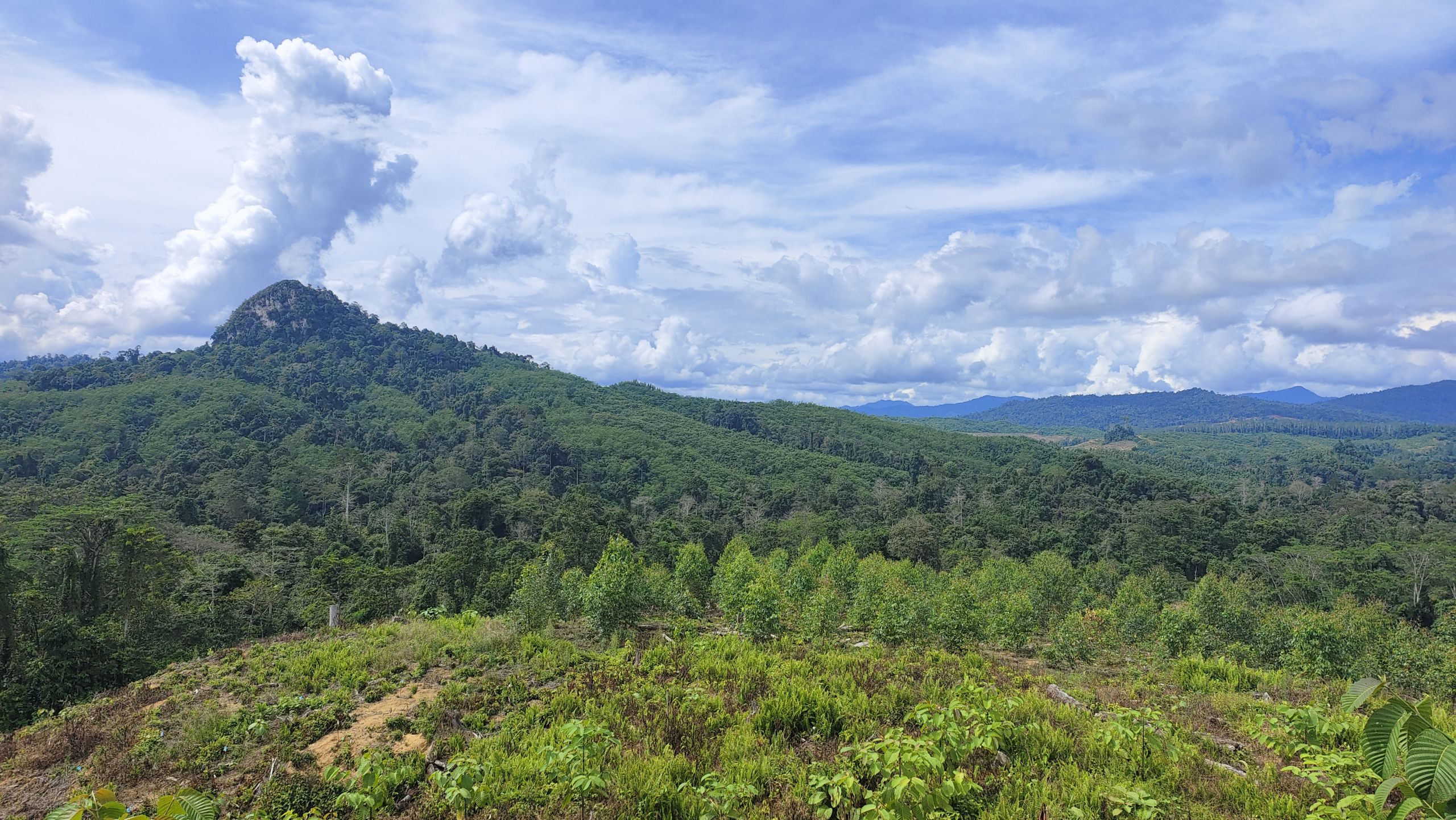
The final location of the field day was a site on top of a hill with a scenic view of a massive limestone rock known as “Batu Saap”. Here stood Eucalyptus pellita trees of high genetic value as explained by the research officer responsible for the site. Some of the trees possessed forms that were straight and more uniform than the regular red mahogany trees surrounding the site. With new facilities underway, these trees will help carry on the BFC’s long efforts toward Eucalyptus tree improvement and unlock a new phase for Sapulut and its R&D team in propagating planting materials. With a brief closing speech by the Technical Manager of BFC, Mr. Paul Warburton, who thanked all the executives and attendees for participating in the field visit, truck engines roared back toward Sapulut’s forestry complex where everyone amicably parted ways.
The R&D team would like to express enormous gratitude to all the executives, consultants, and associates for their constructive feedback, thought-provoking discussions, and support during the field day. We appreciate your precious time and your kind attention to listening to what the team was eager to share. With renewed motivation, the team expects to consistently generate progress toward achieving current and future ambitions.